Originally reported November 13, 2026, at 11:05 a.m. UTC+8.
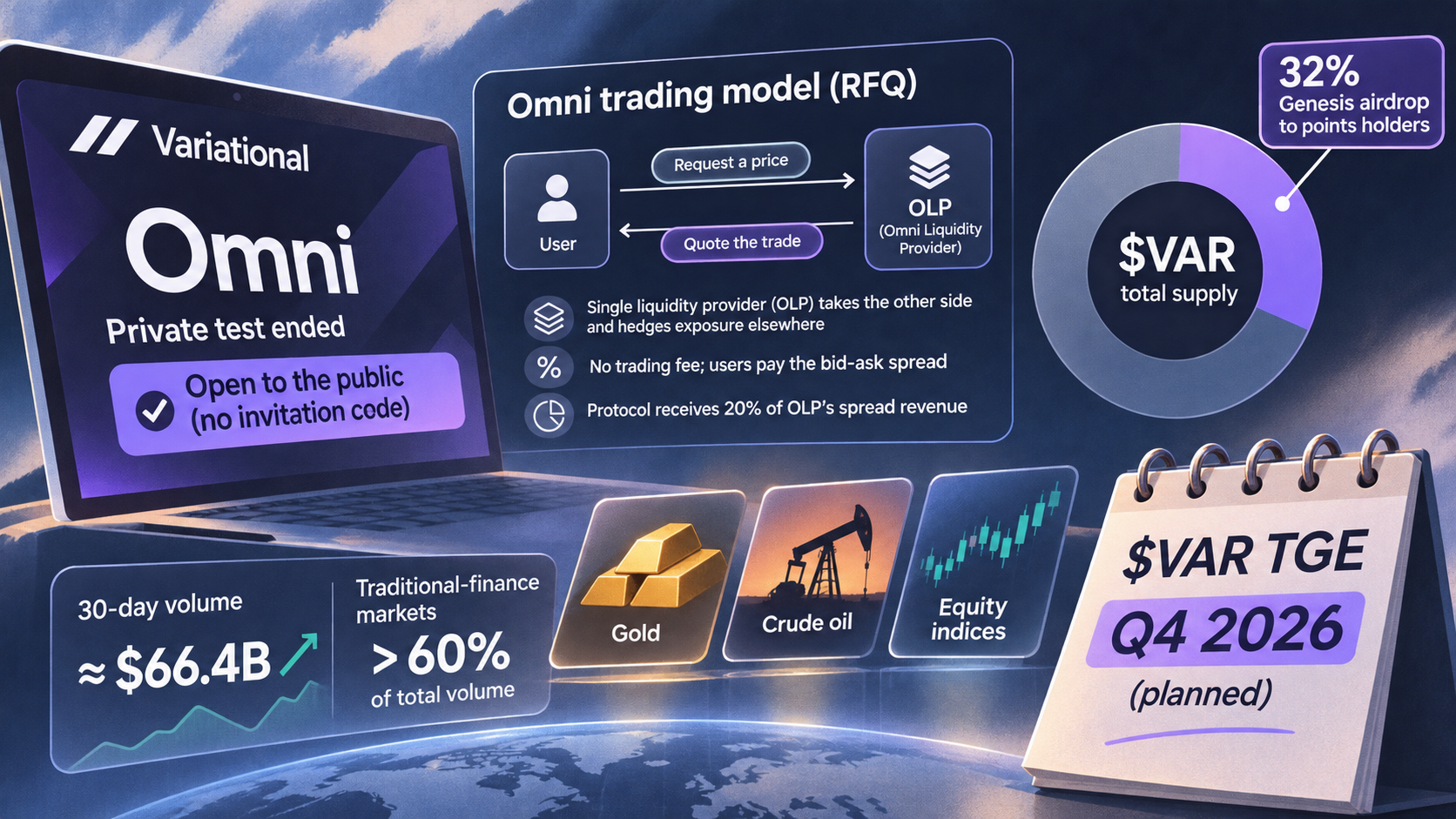
Variational has ended the private test of its Omni trading application. Accounts no longer require an invitation code, bringing a wider audience to a platform built around one liquidity provider rather than a public order book. The opening also comes ahead of a planned $VAR token generation event (TGE) in the fourth quarter of 2026—not a confirmed launch date.
How Omni’s trading model works
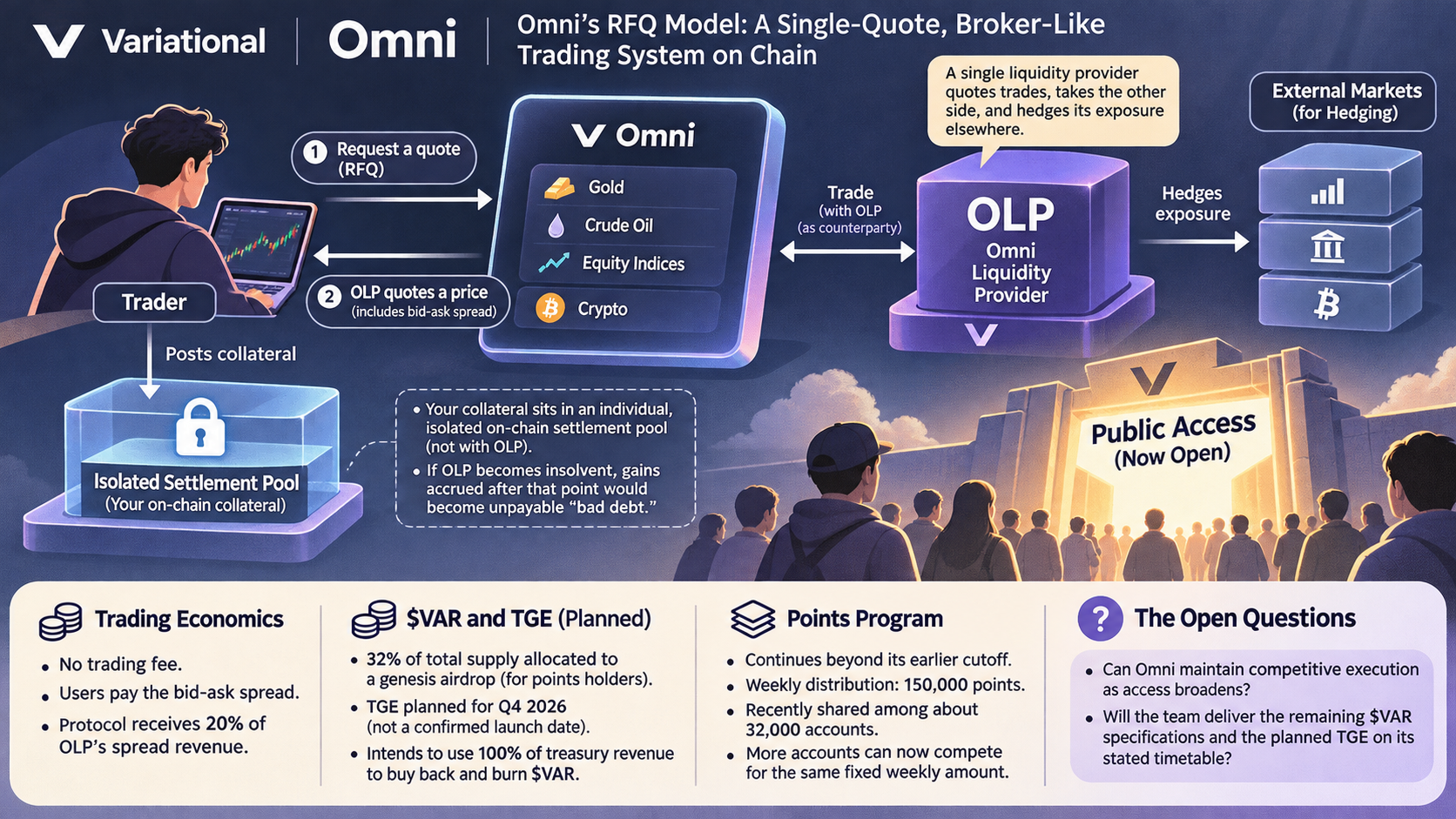
Omni uses a request-for-quote system: a user requests a price, and the Omni Liquidity Provider (OLP) quotes the trade. The Variational team initially funded OLP, which takes the other side of trades and hedges its exposure elsewhere. Omni charges no trading fee, but users pay the bid-ask spread. The protocol currently receives 20% of OLP’s spread revenue.
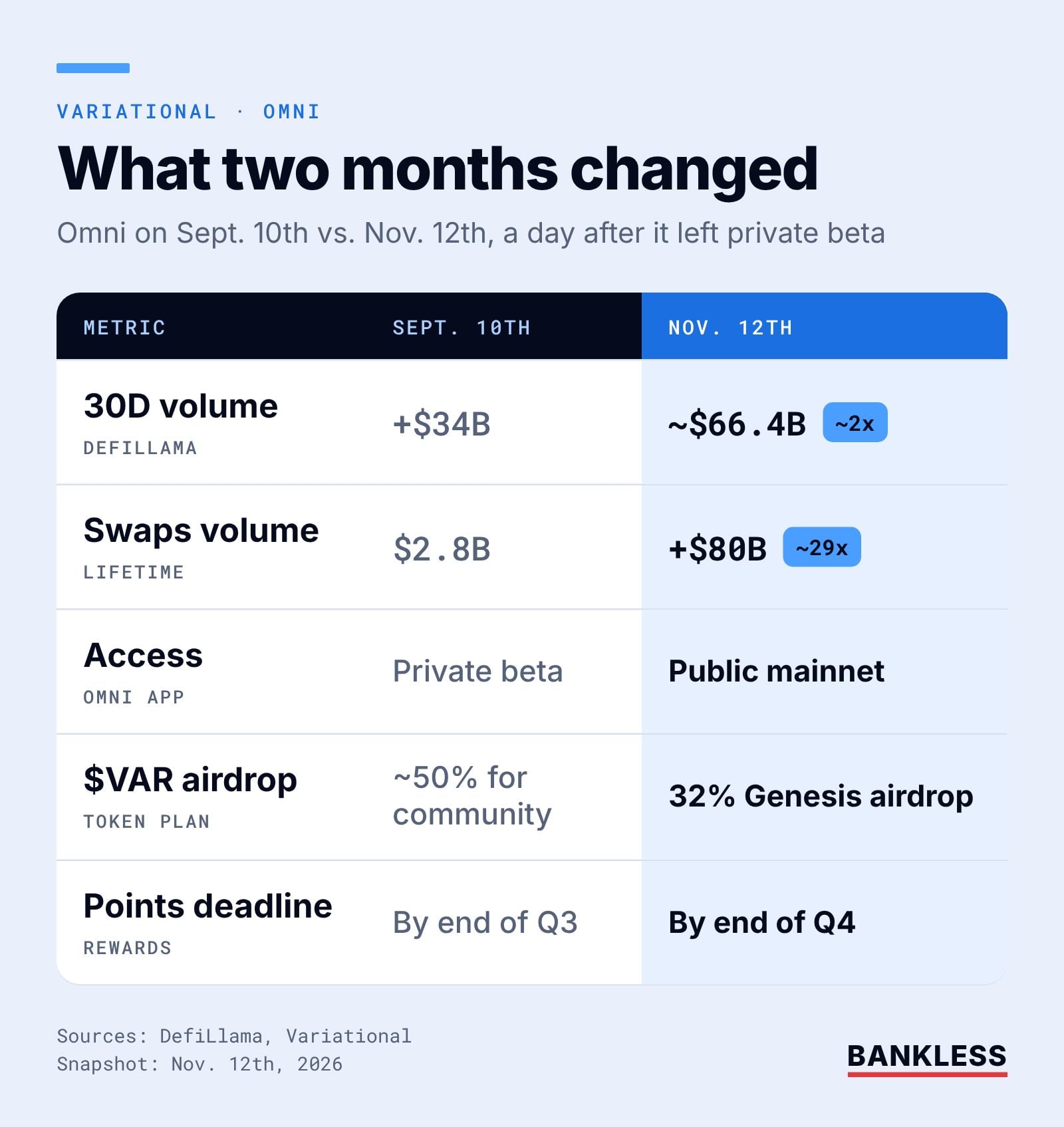
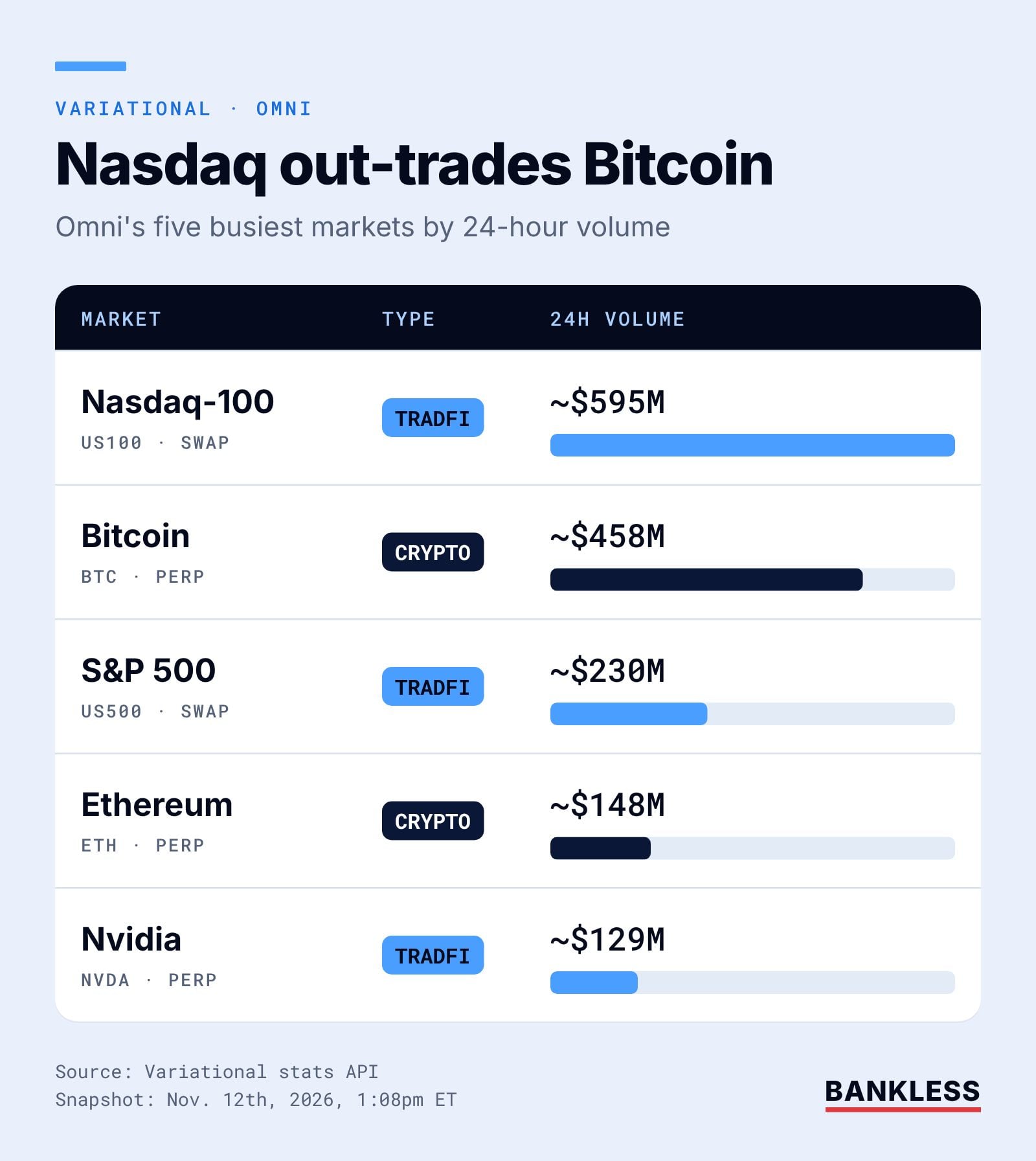
According to DefiLlama figures cited in the original report, Omni’s 30-day volume had risen from more than $34 billion on September 10 to about $66.4 billion as of the report’s Thursday-morning check. Its roughly $2.2 billion in 24-hour volume ranked third among perpetuals platforms at that point, behind Hyperliquid at about $9.84 billion and Lighter at about $2.69 billion.
Much of Omni’s activity was outside crypto. Variational said on November 10 that cumulative volume in its Swaps markets—which include gold, crude oil and equity-index exposure—had exceeded $80 billion. The original report said traditional-finance markets accounted for more than 60% of Omni’s total trading volume. Those cumulative and 30-day figures measure different periods and should not be treated as the same total.
The proposed $VAR distribution and buyback mechanism
In a September 23 tokenomics post, Variational allocated 32% of $VAR’s total supply to a genesis airdrop for points holders. It moved the planned TGE to the fourth quarter of 2026 and said it intended to use 100% of treasury revenue to buy back and burn $VAR. The report did not establish that those buybacks had begun or specify $VAR’s circulating or maximum supply.
The points program had continued beyond its earlier third-quarter cutoff. At the time of reporting, its weekly distribution was fixed at 150,000 points, recently shared among about 32,000 accounts. Removing the invitation requirement could bring more accounts into competition for that fixed weekly amount; it does not establish what any individual will receive.
Variational disclosed approximately $1.05 million from the treasury’s 20% share of spread revenue over the preceding two weeks. If the stated buyback-and-burn plan is implemented, its funding would depend on that revenue stream. The figure is not a report of completed $VAR purchases.
On November 4, CEO Lucas Schuermann said the team remained on track for a TGE within 2026. He said a trading API was available to a small group of early testers and was expected to become publicly available later in November. Further details on buybacks and token utility were still pending. The original report also noted that a strategic partner mentioned in connection with the revised timetable had not been named.
What public access will test
Omni’s single-quote model remains contested. On October 31, X user 0xLoris argued that a platform with one counterparty quoting every asset was not a genuine perpetuals DEX and contrasted it with request-for-quote systems where multiple market makers compete. Variational co-founder Edward Yu responded that collateral is posted transparently on-chain and that Omni must compete for users against other perpetuals venues.
Users’ collateral sits in individual, isolated on-chain settlement pools rather than with OLP. That separation does not remove every risk: OLP’s documentation says gains accrued after an OLP insolvency would become unpayable “bad debt,” and outsiders cannot currently audit its hedging book. A single quote also lacks direct competition from other market makers on each trade. Users can choose another venue, but that is a different constraint on pricing.
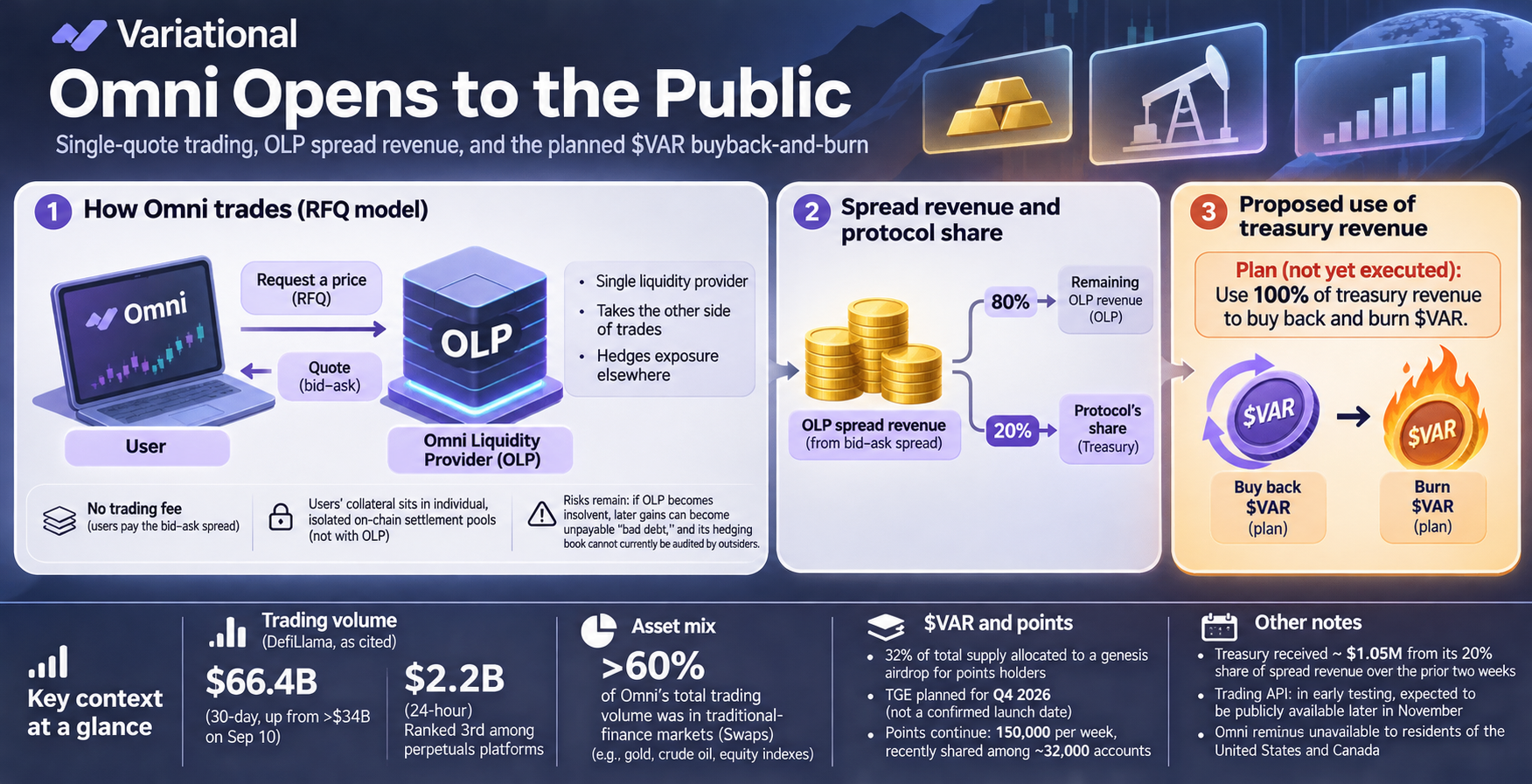
The end of private testing therefore puts two questions into the open: whether Omni can maintain competitive execution as access broadens, and whether the team will deliver the remaining $VAR specifications and planned TGE on its stated timetable. At the original reporting date, neither outcome was settled. Omni was still unavailable to residents of the United States and Canada.
Source: techflowpost.com (originally published 2026-11-13 11:05 UTC+8)