
Historical report: This article reflects a Castle Labs review published by Deep Tide TechFlow on November 11, 2026, at 09:57 China Standard Time. Figures and plans below describe what was reported then, not current conditions.
Ethena Pay: deposits, USDe demand and a proposed ENA role
The review reported that Ethena Pay, launched in September 2026, added its Earn+ savings feature in late October. Earn+ offered up to 12% annual percentage yield through leveraged USDe exposure. At the time of reporting, the review put Earn+ deposits at $7.64 million and the resulting USDe demand at approximately $80 million. Those are the review’s figures, not a measure of unleveraged deposits.
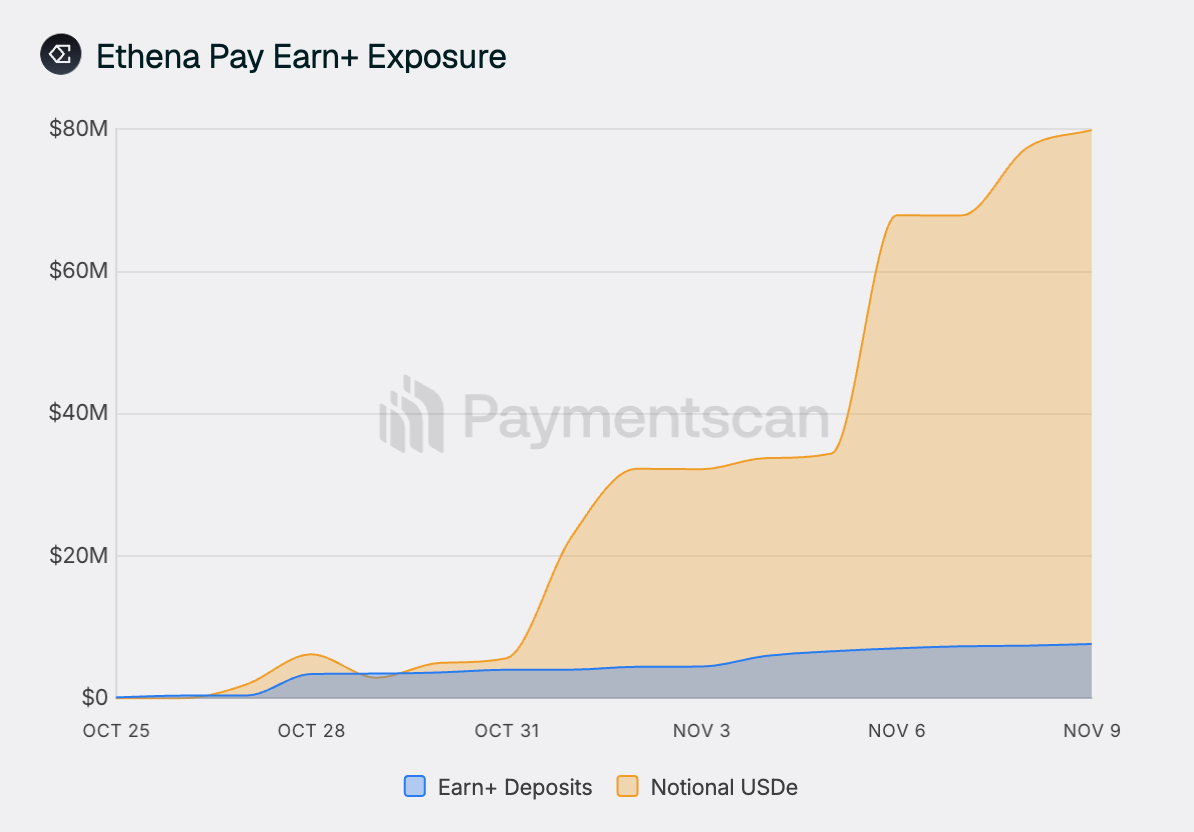
According to the review, an ENA buyback mechanism would begin once total USDe supply exceeded $7.5 billion. It did not say that threshold had been reached. In an interview cited by the review, Ethena Pay’s go-to-market lead, Lito, said an account-tier upgrade requiring users to hold and lock ENA would be announced in the following weeks. That was a stated plan, not an active requirement at publication.

Elysium: where sequencer revenue would go
Elysium’s mainnet had launched the day before publication, according to the review. Built on Arbitrum Orbit, it uses HYPE for gas and settles final state on HyperEVM. Its stated revenue allocation sends 50% of sequencer revenue to buybacks, 25% to a treasury and 25% to developer incentives. The review did not specify the buyback asset.
The review reported more than $50 million bridged to Elysium after launch, while saying little of that capital had entered decentralized-exchange liquidity pools. It also described an upgrade to access Hyperliquid order-book data as planned for roughly four weeks later. Neither early liquidity conditions nor that upgrade schedule should be treated as current.
Other mechanisms and events in the review
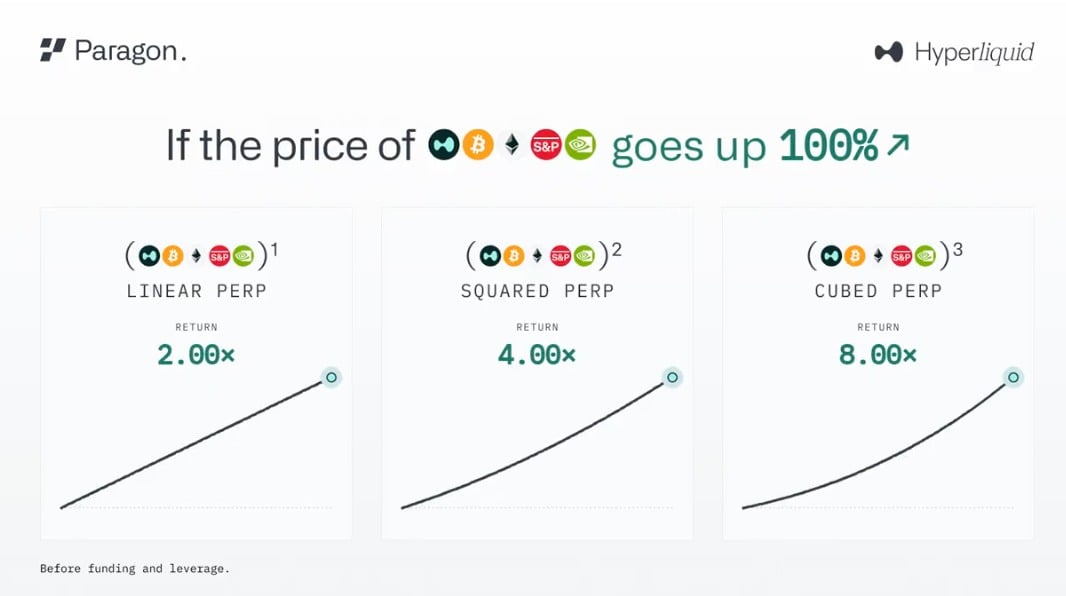
Paragon had launched power perpetuals through Hyperliquid’s HIP-3 framework. Unlike a conventional perpetual that tracks an underlying price, its squared or cubed contracts track powers of that price, without an option strike or expiry. The review illustrated that a 10% underlying-price rise corresponds to a 21% rise in a squared price measure, while a 10% fall corresponds to a 19% decline. Those examples exclude funding and leverage; they are not promised trading returns.
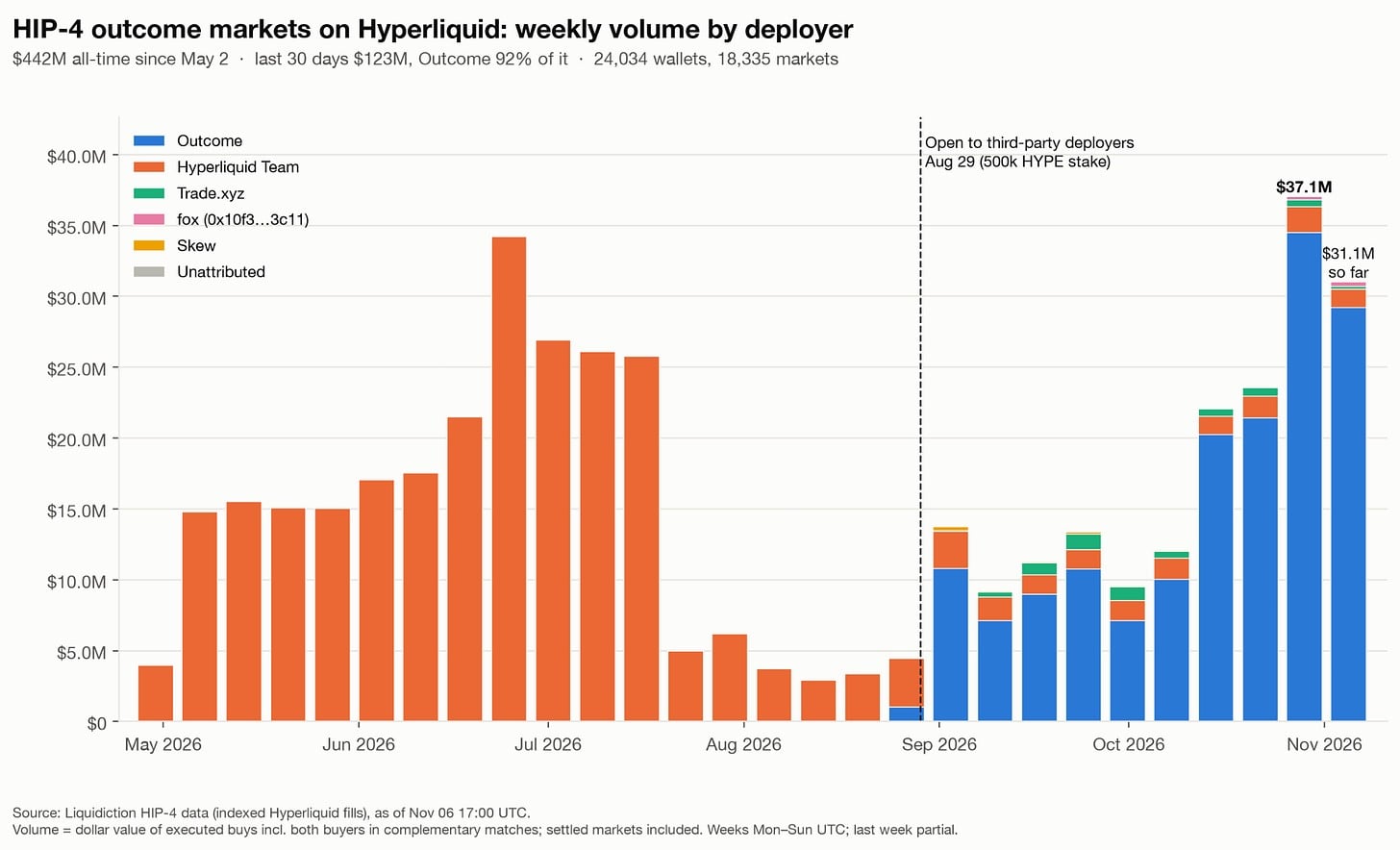
The review also reported growing volume in Hyperliquid’s HIP-4 prediction markets, led in part by deployer Outcome, with most volume concentrated in sports markets. It mentioned a potential Outcome airdrop and a possible future Hyperliquid points season—neither was presented as confirmed. Separately, it reported that fixed-rate lending protocol IRIS had launched on mainnet, using existing lending markets including Morpho, Spark and Aave.
Source: techflowpost.com (originally published 2026-11-11 09:57 UTC+8)