
A CryptoPotato report published on November 24, 2026 said Venice Token (VVV), described as an AI-related token, had risen about 30% over the week even as Bitcoin (BTC), Ethereum (ETH), and Ripple (XRP) were still lower on a weekly basis.
At the time of that report, VVV traded near $26. CryptoPotato put the yearly change at roughly 2,500% and the market capitalization at almost $1.3 billion, ranking VVV the 60th-largest cryptocurrency. Those figures describe the market as reported that day, not a later reading.
What was cited as a possible catalyst
CryptoPotato treated an Arthur Hayes endorsement as a potential catalyst, not a confirmed cause of the move. It said Hayes had picked VVV as one of four tokens that could “explode” before an AI bubble ended and had set $40 as a target.
Lookonchain reported that shortly after that statement Hayes transferred more than $5 million worth of crypto. The transfer was described as sparking speculation that he was positioning to buy. The analytics platform later said Hayes had in fact purchased, receiving 15,000 VVV from Flowdesk.
The report also said additional tailwinds may have come from ecosystem developments and from positive comments by several influential market participants. It did not specify those developments.
Analyst comments, with the claims left attributed
Several hours before the November 24 report, X user Ansem told 1.4 million followers that VVV, PEARL, and DRV would be “the least correlated to the broader market and each have their own unique individual bull cases.”
Nebraskangooner said the token’s outlook had turned increasingly bullish after a successful head-and-shoulders reclaim, and identified the $26 area as the last significant resistance before a possible continuation.
Michael van de Poppe called VVV “one of the most bullish charts in the ecosystem.” He said it was clearly trending above the 21-day moving average, that a pullback toward $22–$23 would be an ideal area to accumulate, that his first expected resistance was the high at $32, and that a second target zone was $44.
An analyst identified as Arslan said they had exited completely once VVV approached $26. Arslan noted Hayes’s $40 call and said many large influencers had leaned long afterward, adding that crowded bullish calls were a reason to secure profits rather than follow the crowd.
These levels are the speakers’ stated views. The report did not present them as protocol rules, completed outcomes, or guaranteed paths.

Overbought reading and who held circulating supply
CryptoPotato said VVV’s Relative Strength Index had risen to nearly 70 on a cited TradingView chart. It read that level as overbought territory and as a sign that a pullback could follow. That is an indicator reading in the report, not a confirmed subsequent decline.
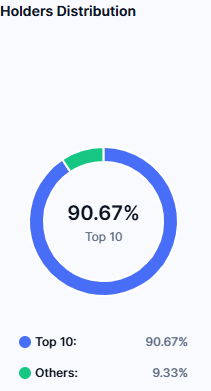
On distribution, CoinMarketCap data cited in the same report showed the top 10 addresses controlling more than 90% of VVV’s circulating supply. The report said that concentration left the token vulnerable to sudden swings if a handful of large holders moved coins. The figure applies to circulating supply as cited; the report did not give total supply, a maximum supply, or a vesting or unlock schedule, so it does not show when any non-circulating tokens would become available or what behavior an issuance schedule would reward.