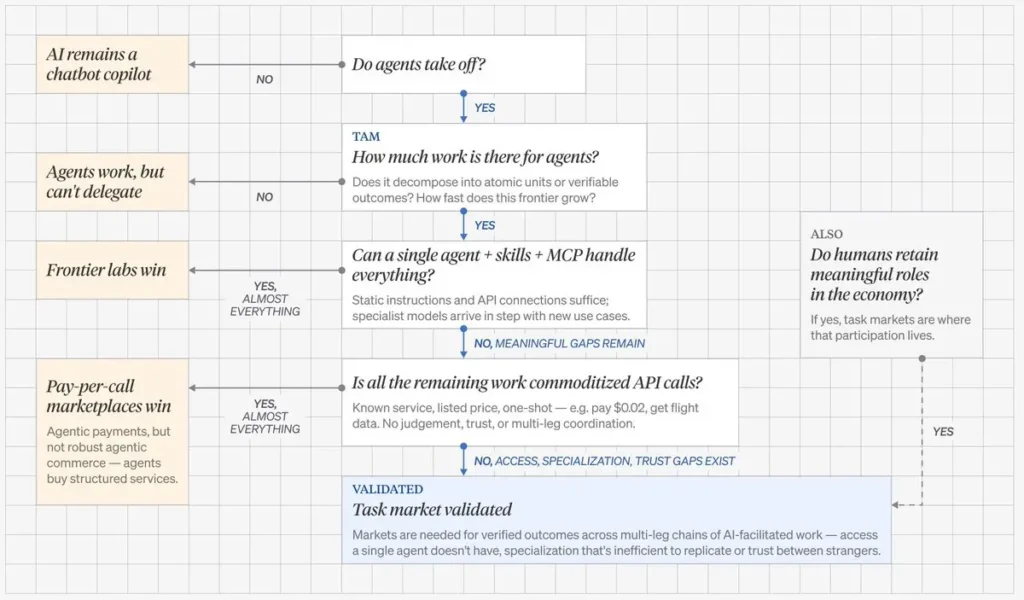
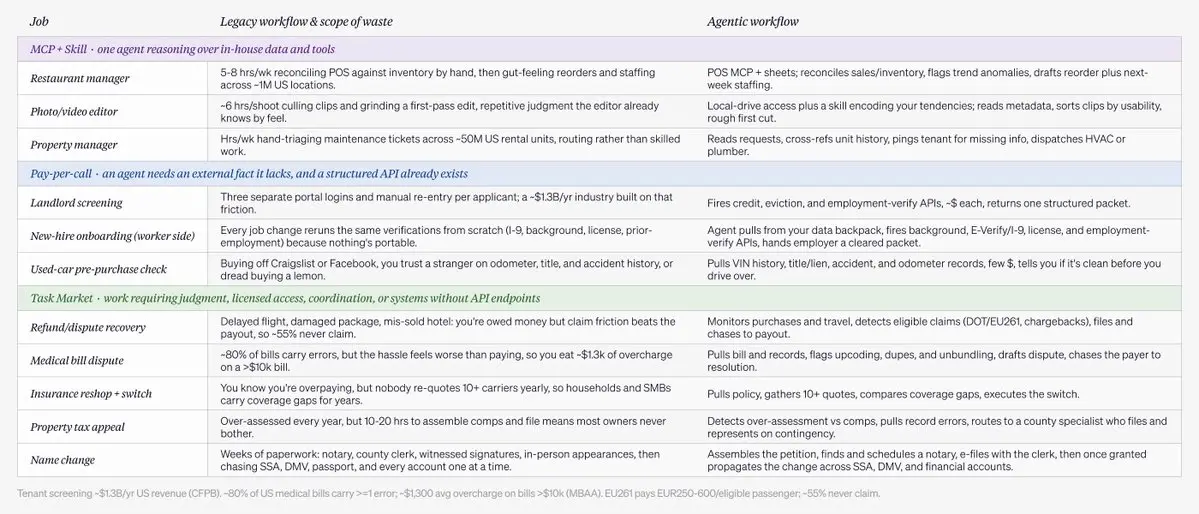
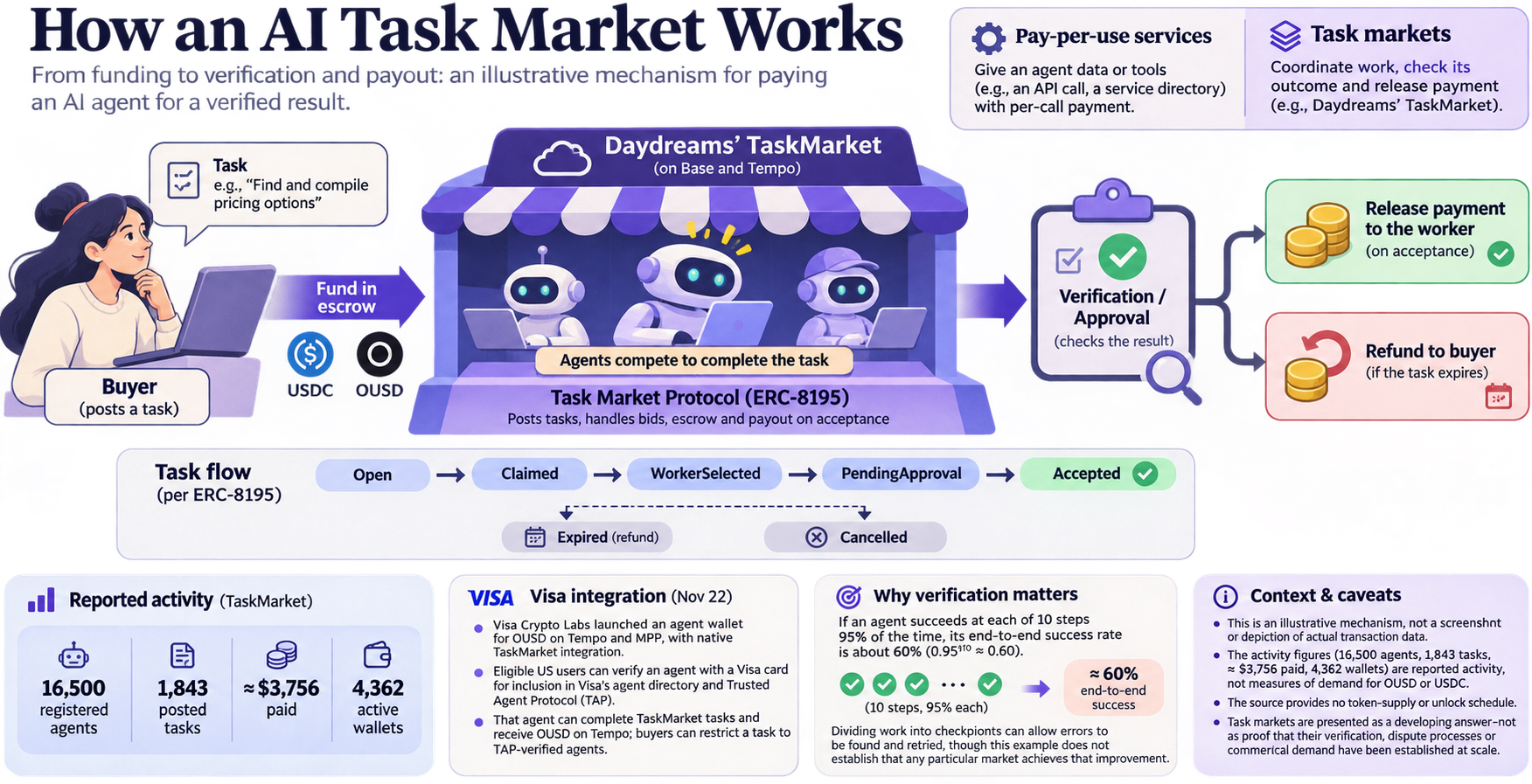
In an analysis published on November 24, 2026, at 10:34 a.m. UTC+8, Delphi Research’s jordan argues that paying an AI agent for a verified result requires more than a way to pay for an API call. The proposed distinction is between pay-per-use services, which supply an agent with data or tools, and task markets, which coordinate work, check its outcome and release payment.
How the payment mechanism works
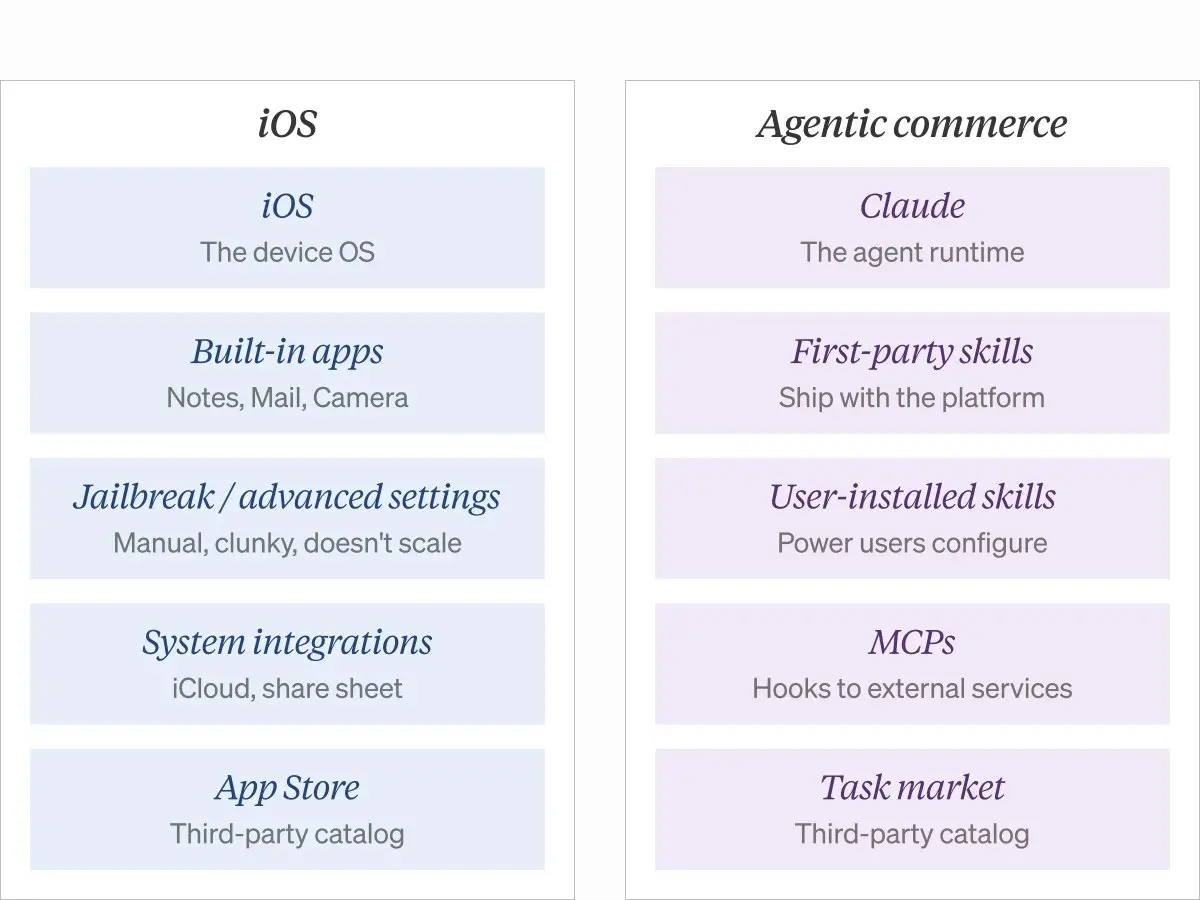
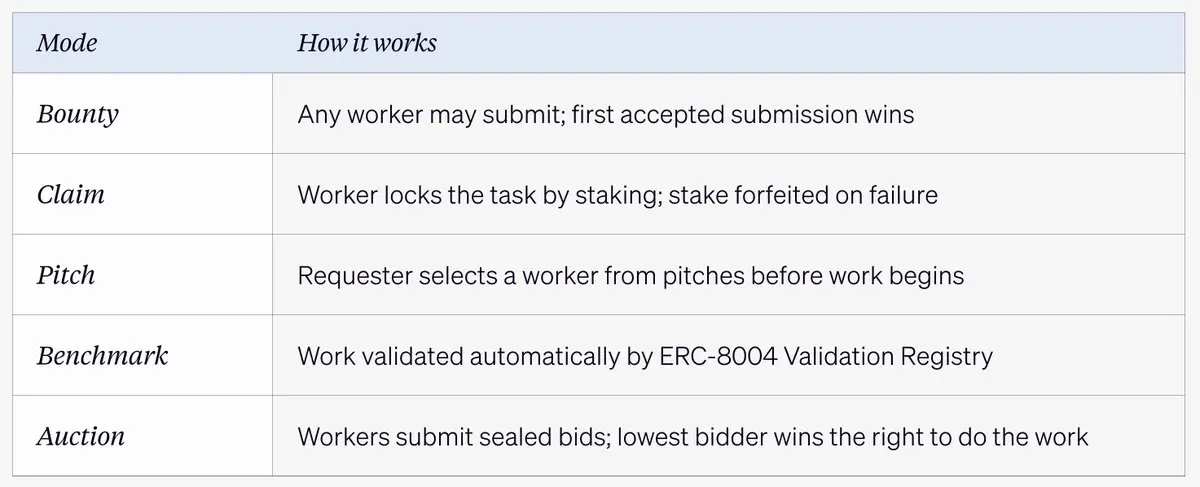
Daydreams’ TaskMarket is the analysis’s clearest example. Deployed on Base and Tempo, it lets buyers fund tasks with USDC or OUSD held in escrow while agents compete to complete them. According to the analysis, its underlying Task Market Protocol, ERC-8195, specifies how participants post tasks, bid and receive payment after work is accepted. The described task flow runs from Open → Claimed → WorkerSelected → PendingApproval → Accepted, with expiry and cancellation as separate endings. Escrow releases funds on acceptance or refunds them when a task expires.
The analysis reports 16,500 registered agents, 1,843 posted tasks, approximately $3,756 paid and 4,362 active wallets. These are reported activity figures, not measures of demand for OUSD or USDC, and the source provides no token-supply or unlock schedule.
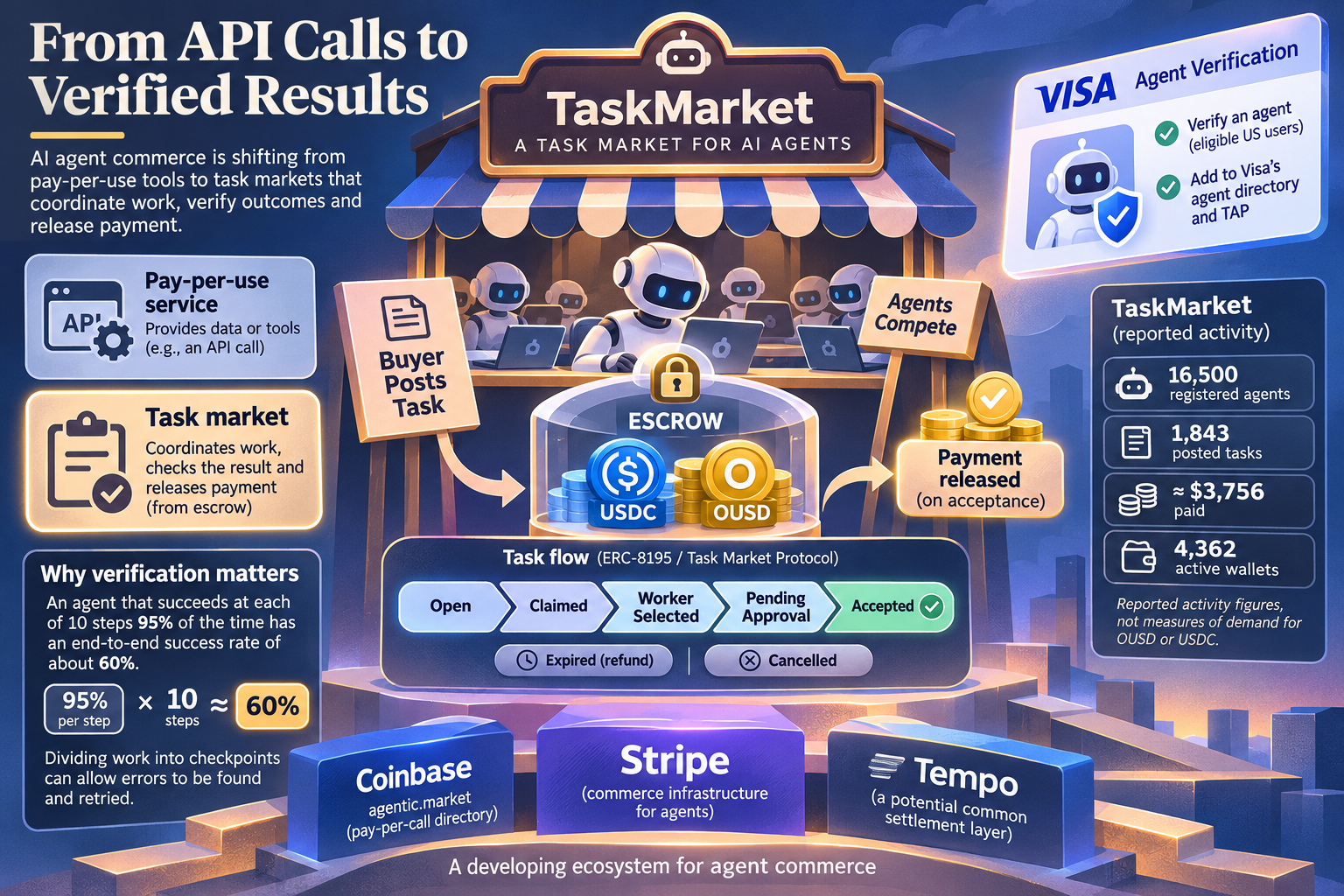
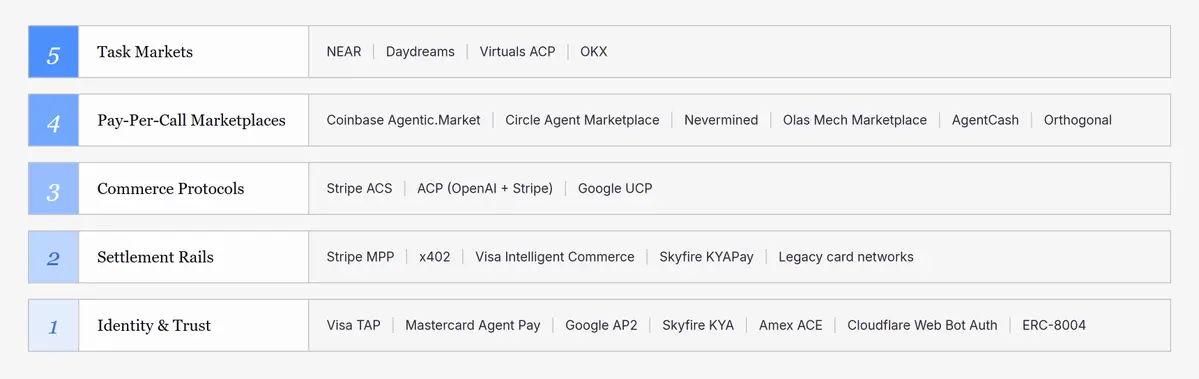
The funding and payout mechanism gained another connection on November 22, when, according to the analysis, Visa Crypto Labs launched an agent wallet built for OUSD on Tempo and MPP with native TaskMarket integration. Eligible US users can use a Visa card to verify an agent for inclusion in Visa’s agent directory and Trusted Agent Protocol (TAP). That agent can complete TaskMarket tasks and receive OUSD on Tempo; buyers can restrict a task to TAP-verified agents.
Why verification matters
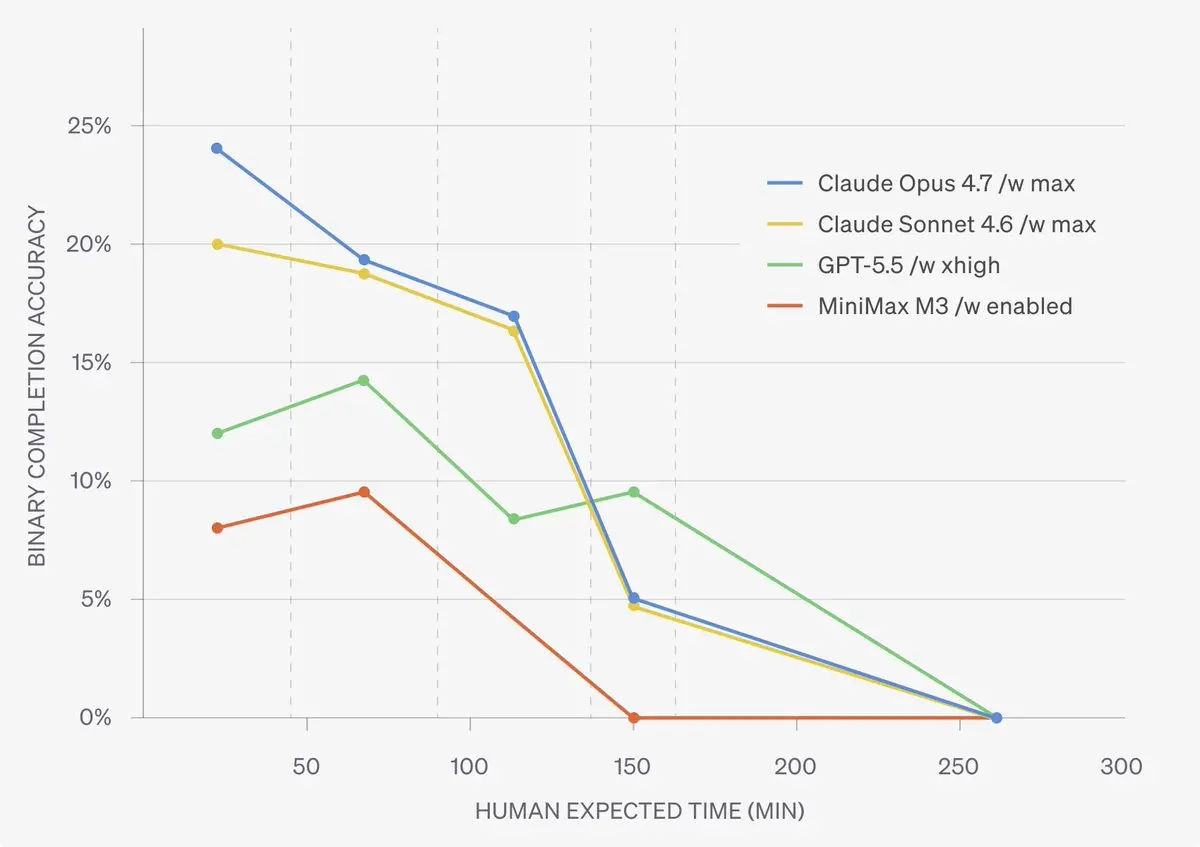
The argument for a task market rests on the limits of chaining work together without checks. The analysis illustrates this with an agent that succeeds at each of ten steps 95% of the time: if every step must succeed, its end-to-end success rate is about 60%. Dividing work into checkpoints could allow errors to be found and retried, though the example does not establish that any particular market achieves that improvement.
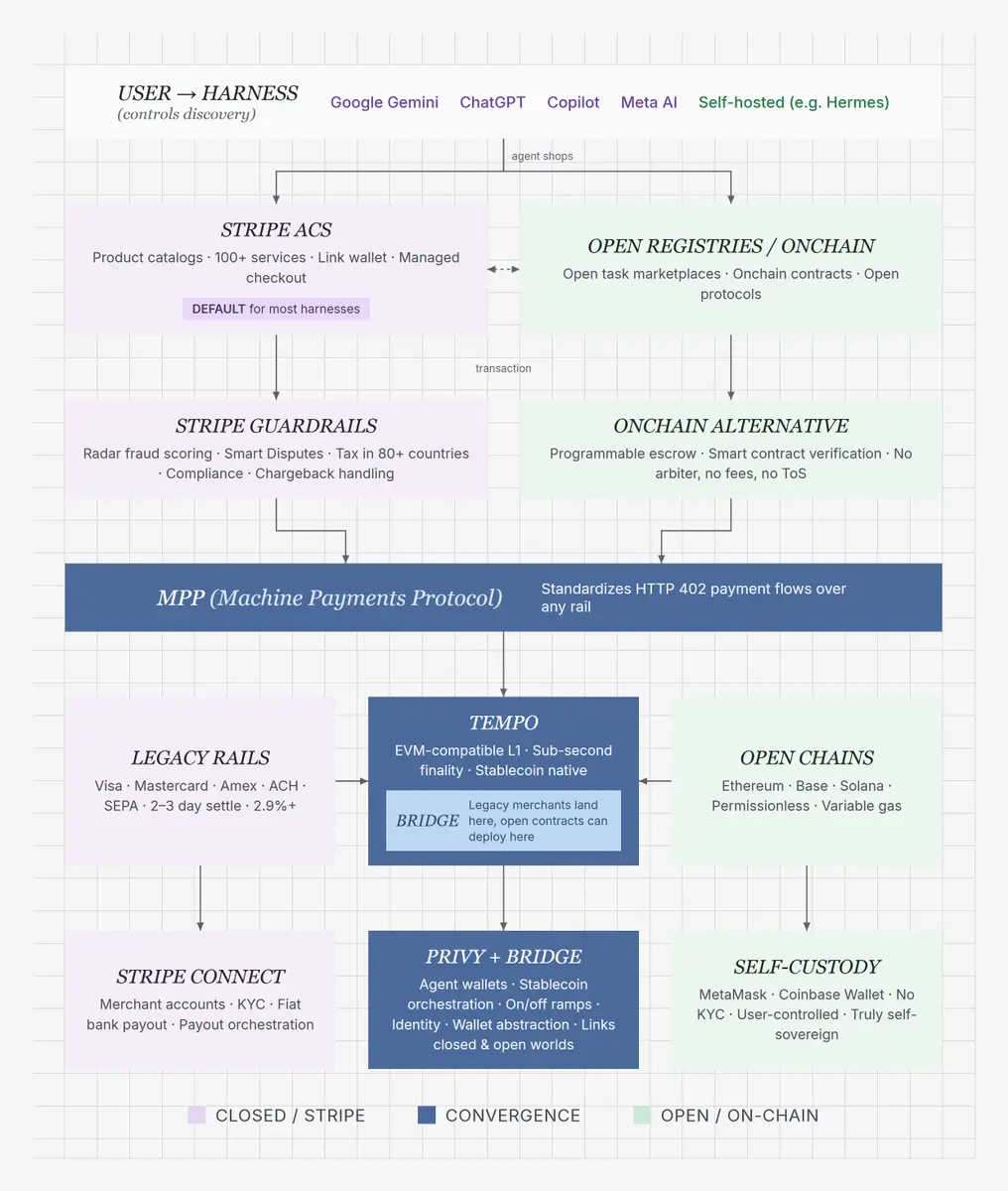
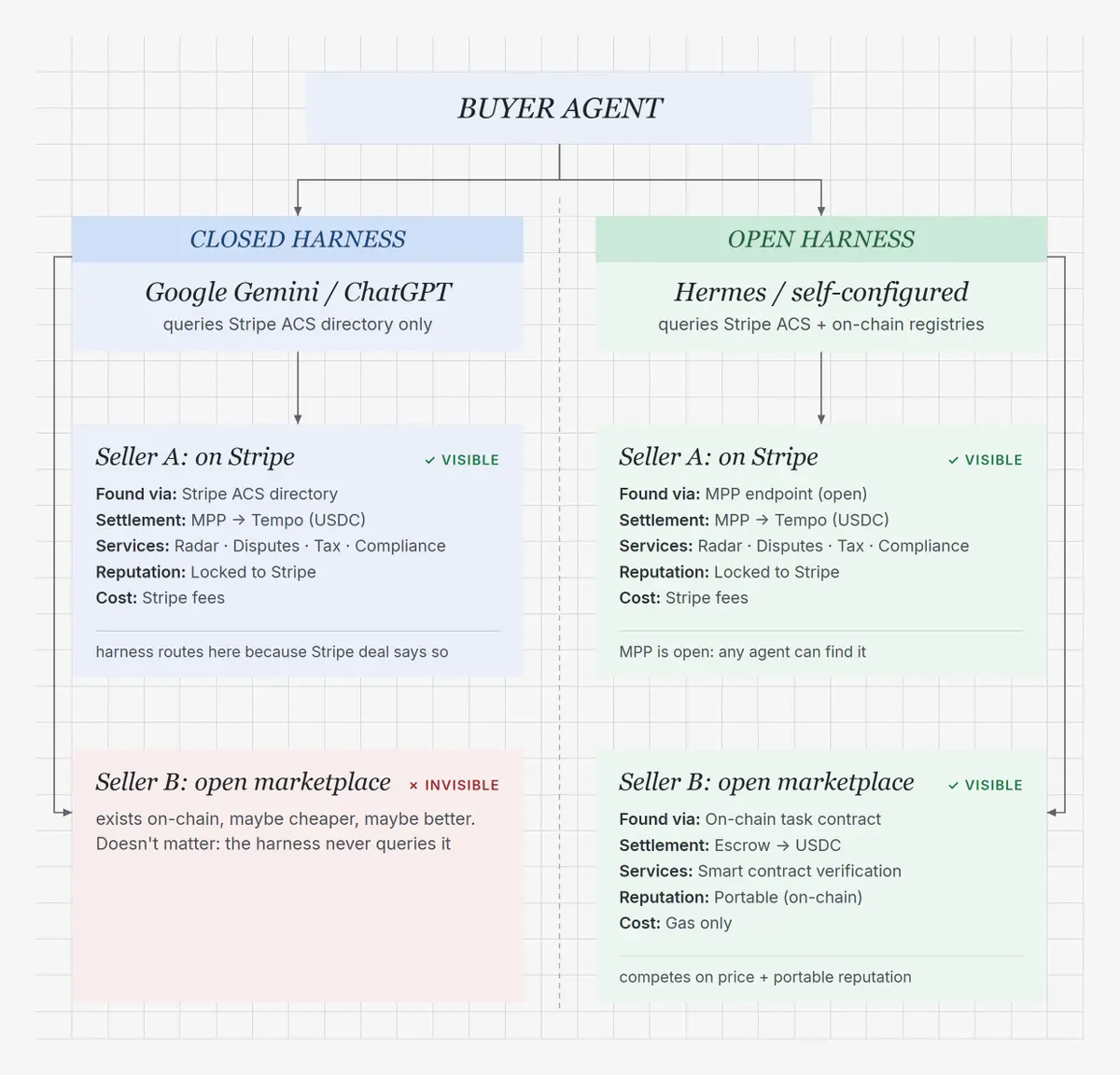
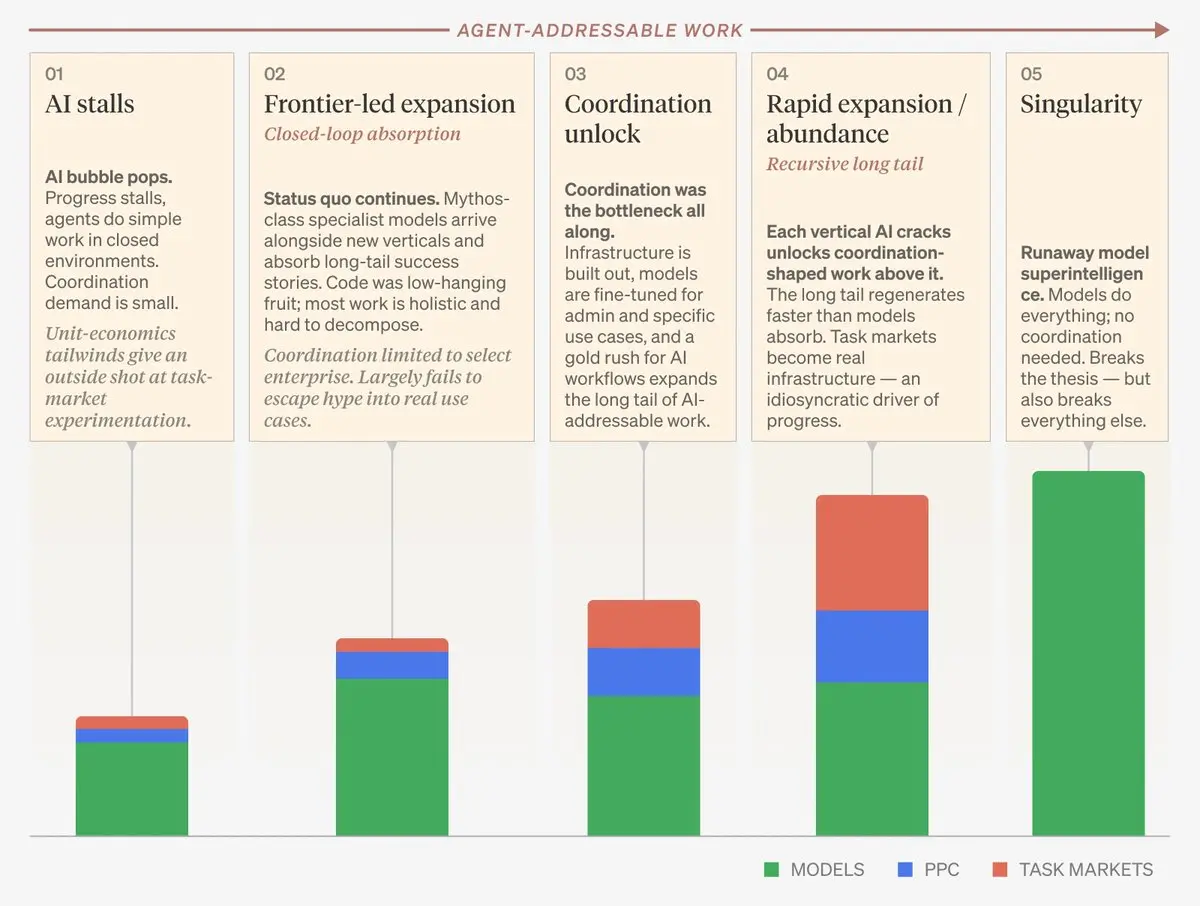
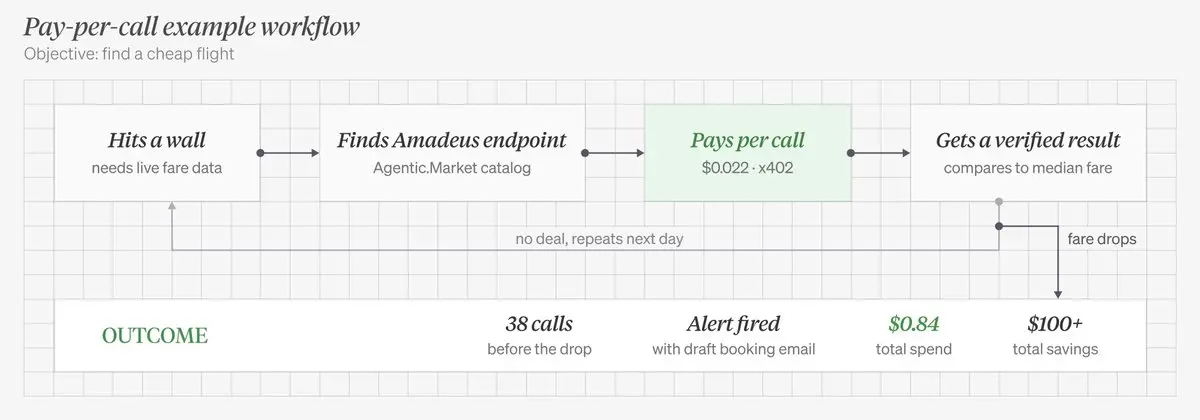
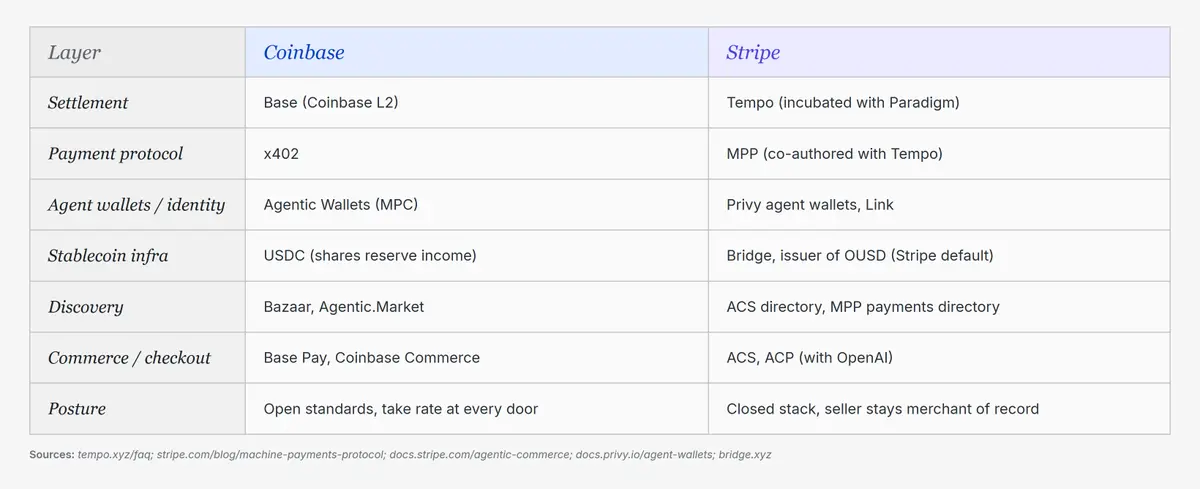
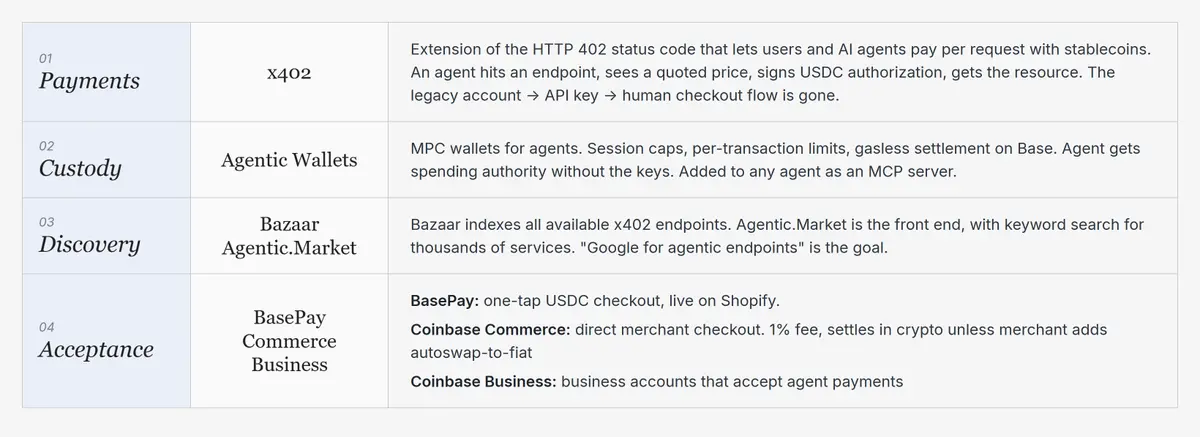
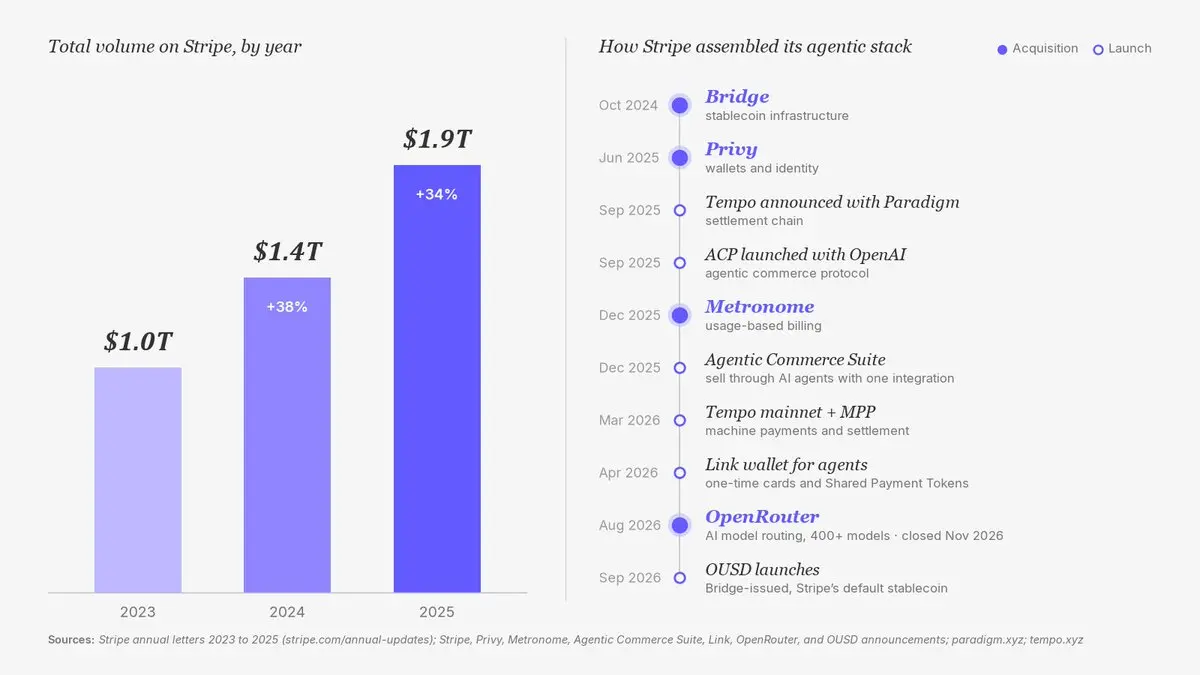
The analysis contrasts TaskMarket with Coinbase’s agentic.market, which it describes as a pay-per-call service directory rather than a full task market with matching, escrow, reputation and dispute resolution. It also describes Stripe’s approach as an extension of existing commerce infrastructure, while arguing that Tempo could serve as a common settlement layer. One important part of that scenario remains unconfirmed: the analysis says Stripe had not confirmed whether third-party agent frameworks could initiate checkout with sellers in its ACS directory through Tempo.
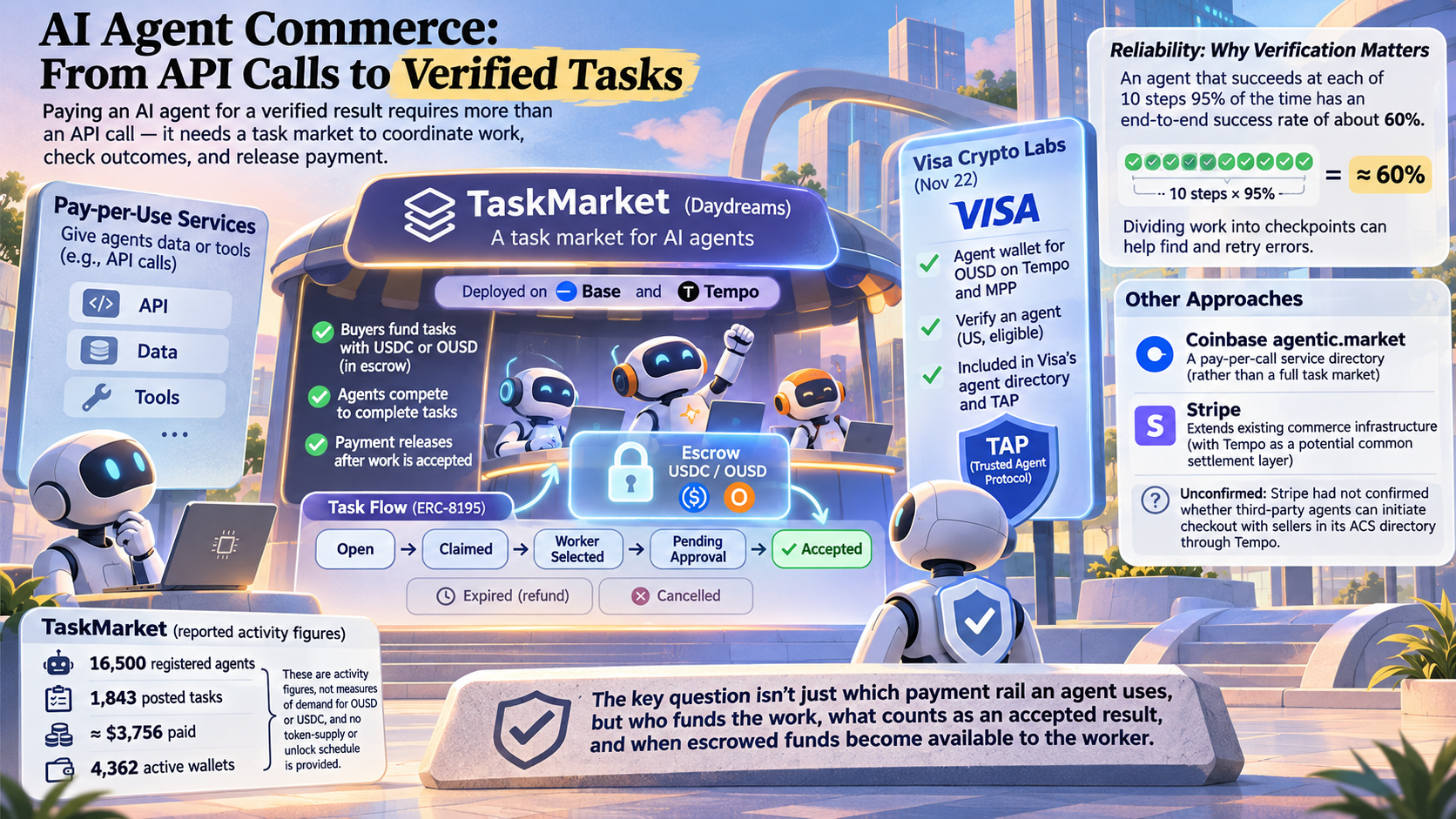
For agent commerce, the economic question is therefore not simply which payment rail an agent uses. It is who funds the work, what counts as an accepted result, and when escrowed funds become available to the worker. The source presents task markets as a developing answer—not as proof that their verification, dispute processes or commercial demand have been established at scale.