
In an account published on November 16, 2026, trader 3 (@3i) described using on-chain activity and public infrastructure updates to anticipate events involving cashcat and PONS. The account is a retrospective of the trader’s own positions and reported profits, not independent confirmation that any participant had advance knowledge of a listing.
cashcat: from infrastructure signals to a larger position
The trader said an earlier review of Robinhood listings had shown Wintermute transferring tokens to a Robinhood hot wallet roughly an hour before announcements. That pattern prompted the trader to monitor Wintermute wallets on Robinhood Chain, alongside BitGo infrastructure and GitHub updates. Neither firm’s activity alone established that cashcat would be listed.
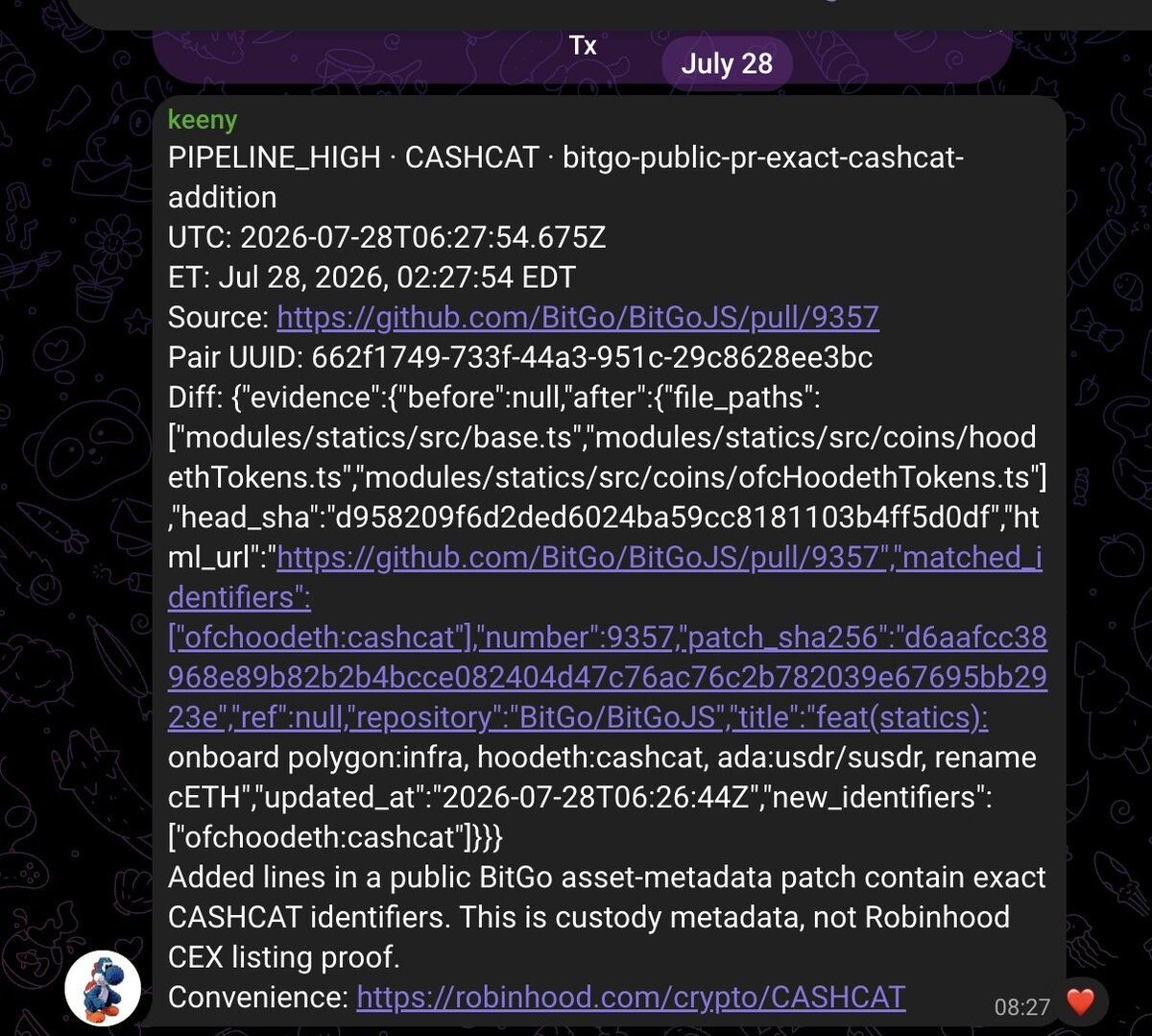
On July 27, the trader’s BitGo monitor detected hoodeth:cashcat in a public pull request. BitGo subsequently published an update that included cashcat and 99 Robinhood Chain stock tokens. The trader interpreted their appearance together as evidence of a Robinhood-related request, while acknowledging that BitGo serves many clients.
By July 29, the trader said they and a partner held 1.5% of cashcat’s total supply. At 17:48 UTC on August 3, their monitoring tool detected a Wintermute authorization involving a cashcat/WETH liquidity pool. About half an hour later, a wallet they suspected belonged to a Robinhood insider placed an unfilled $11,000 cashcat limit order. The wallet’s owner was not established.
Concerned that other traders would notice the order, the pair abandoned a gradual buying plan. They said they bought more than $1 million of cashcat and increased their combined holdings to more than 4% of total supply. Those percentages describe their claimed share of total supply, not circulating supply. Robinhood listed cashcat three days later, according to the account; the trader said the pair earned more than $4 million combined. An earlier estimate that a listing-day price move might reach 200%–300% was their forecast, not a reported outcome.
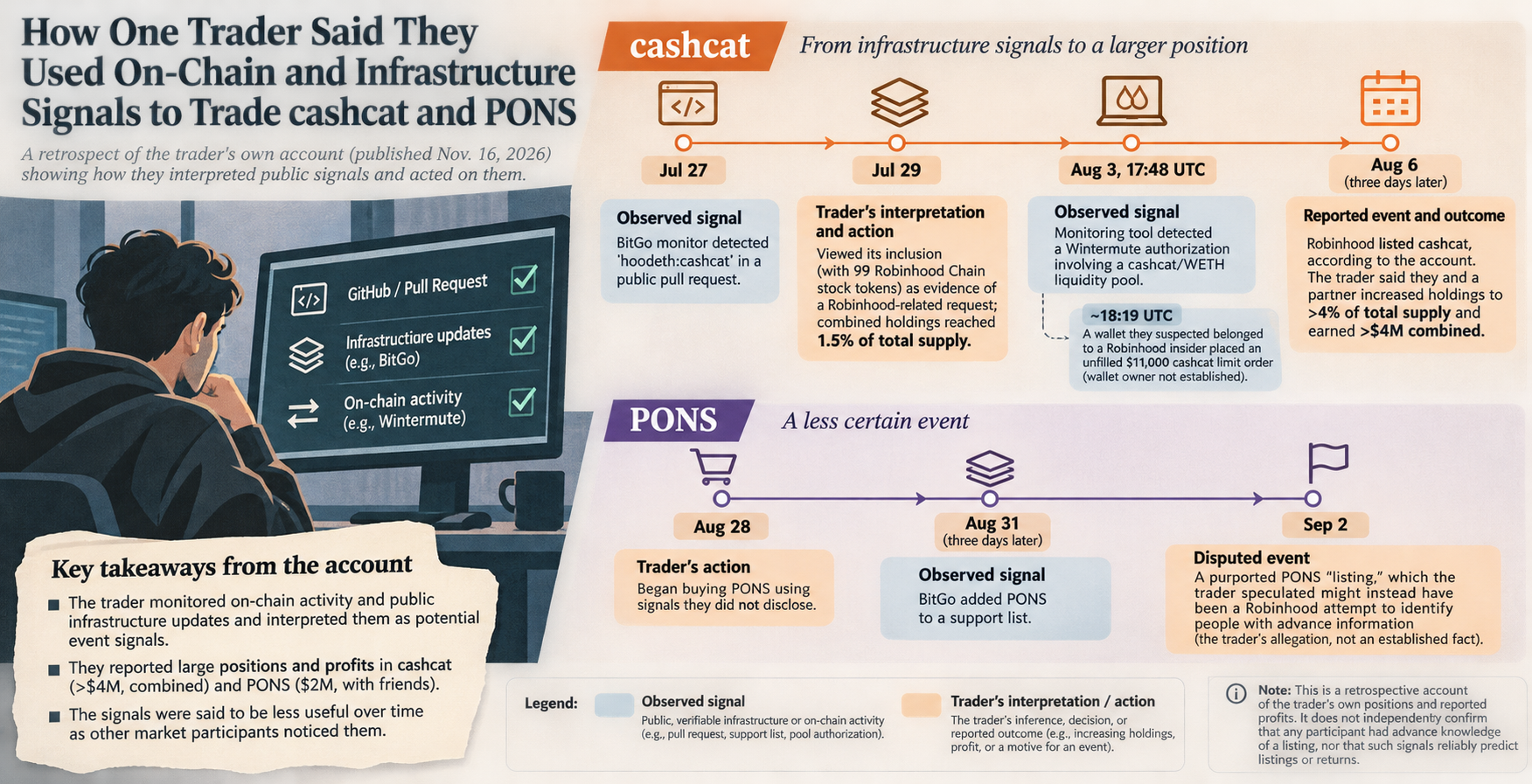
PONS: a less certain event
The trader said they began buying PONS on August 28 using signals they did not disclose. BitGo added PONS to a support list three days later, and Wintermute subsequently began providing market-making services, according to the account. The trader described a September 2 event as a purported PONS “listing,” but speculated that it might instead have been a Robinhood attempt to identify people with advance information. That motive is the trader’s allegation, not an established fact.
The trader reported that they and friends made $2 million from PONS. They also said the signals used in these trades had since become less useful as other market participants noticed them. The account illustrates how traders interpreted infrastructure changes as potential event signals; it does not show that those signals reliably predict listings or returns.