On November 11, 2026, Odaily reported that Aethir had posted on X that an update to the ATH token model was live. The ATH burn dashboard was enabled at the same time, and daily burns had started.
Burn totals in the notice
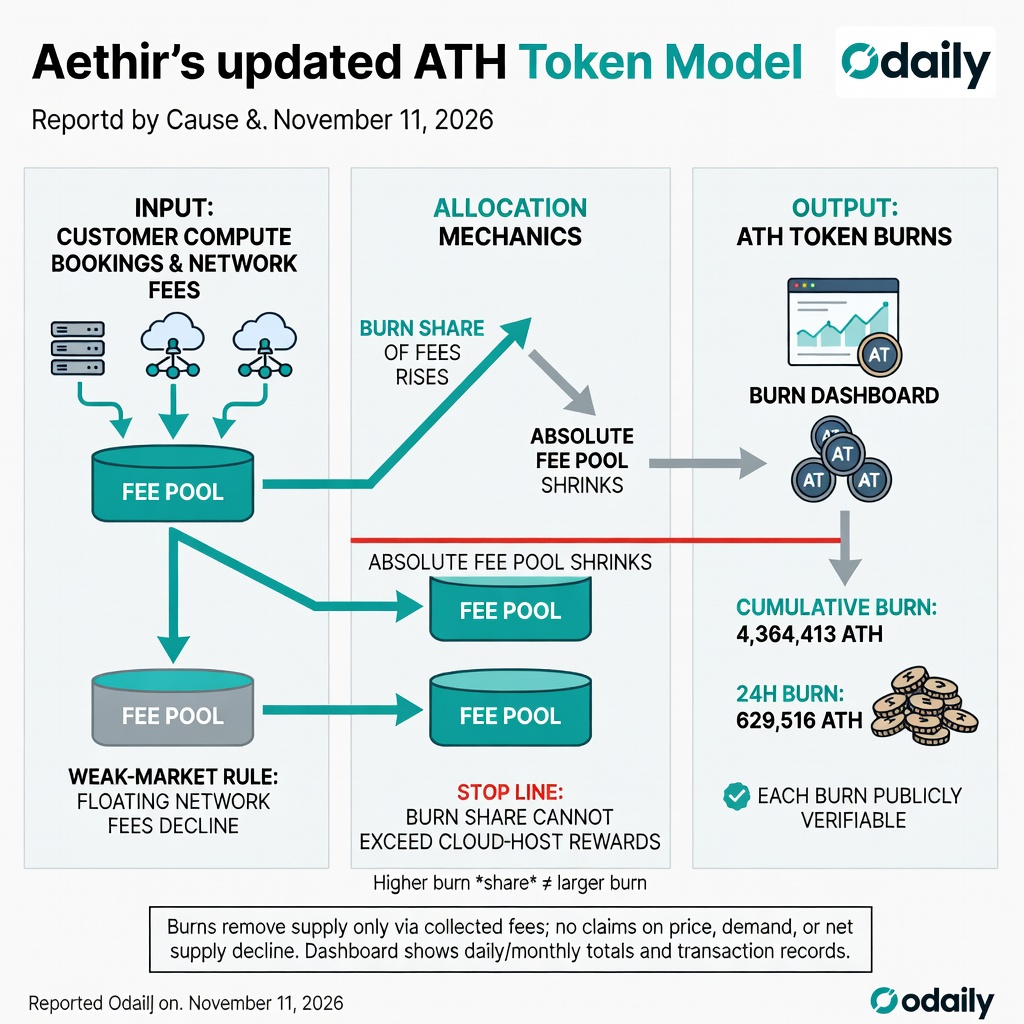
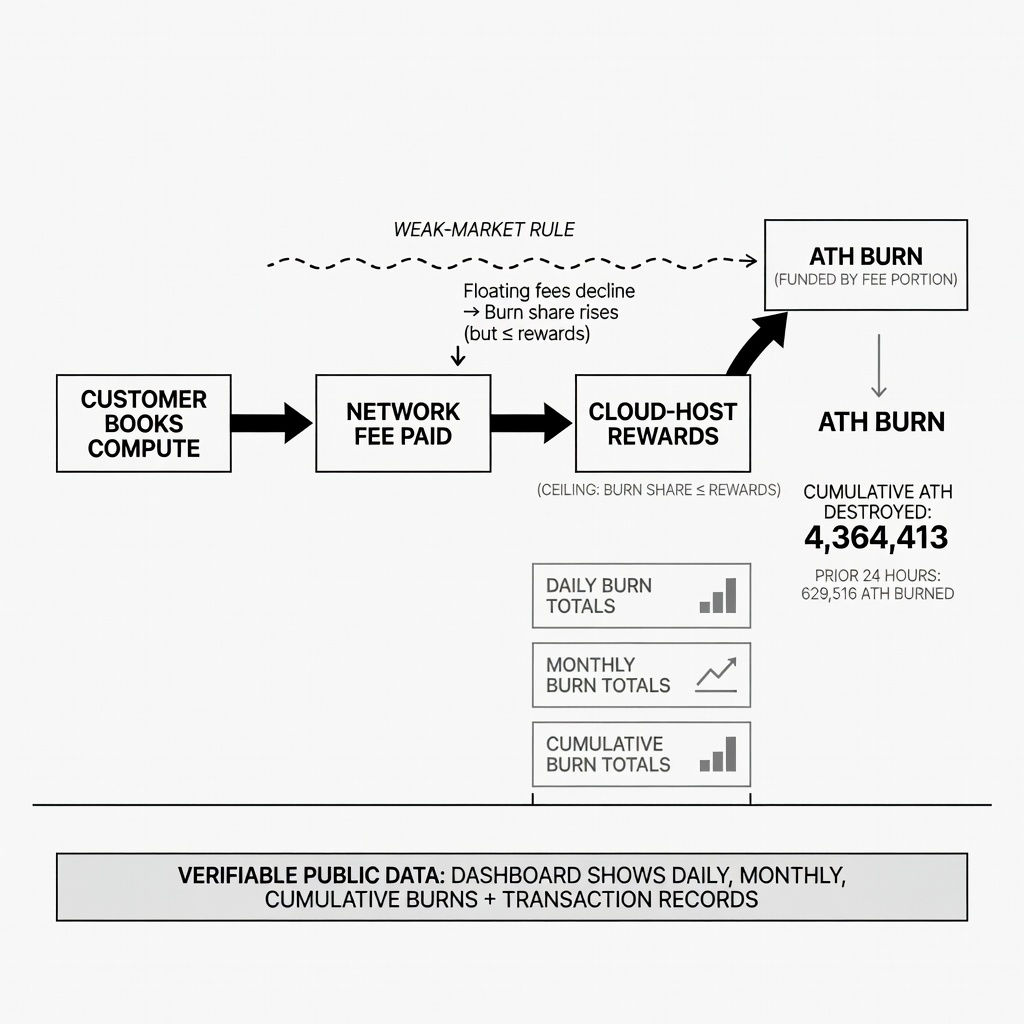
As relayed by Odaily from that post, cumulative ATH destroyed stood at 4,364,413. Of that amount, 629,516 ATH had been burned in the prior 24 hours. Those figures are reported results at the time of the notice, not a schedule of future burns.
How burns are funded
Aethir said the tokens burned are funded from a portion of the network fees customers pay when they book compute. The same post described a weak-market rule: when the market is soft, floating network fees fall and the share allocated to burns rises. That burn share does not exceed cloud-host rewards.
The notice does not give the fee percentages, the size of cloud-host rewards, or ATH circulating, total, or maximum supply. It also does not describe issuance, vesting, or unlocks, so it does not show whether net supply is declining.
What the rule rewards
Under the mechanism as stated, customers who book compute pay the fees that fund burns. Cloud-host rewards remain a ceiling: the burn share can rise in a weaker market, but it is not allowed to surpass those rewards. A higher burn share is not the same as a larger burn. The post says floating fees themselves decline when the market is weak, so the absolute fee pool can shrink even as the proportion directed to burns increases.
Burns remove supply only to the extent fees are actually collected and the tokens are destroyed. The notice ties that removal to compute bookings. It does not claim that a burn, a low fee level, or a higher burn share creates lasting demand for ATH, and it says nothing about price or returns.
What can be checked
Aethir said each burn can be verified publicly. The dashboard shows daily, monthly, and cumulative burn totals, plus complete transaction records.
Original report: Odaily newsflash, published November 11, 2026 at 18:39 (UTC+8).